




Comparing Wood Burners and Heat Pumps for Rural Homes
Weigh up wood burners and heat pumps for an off-grid rural home — running costs, efficiency, emissions, fuel storage and the practical questions to ask before you commit.
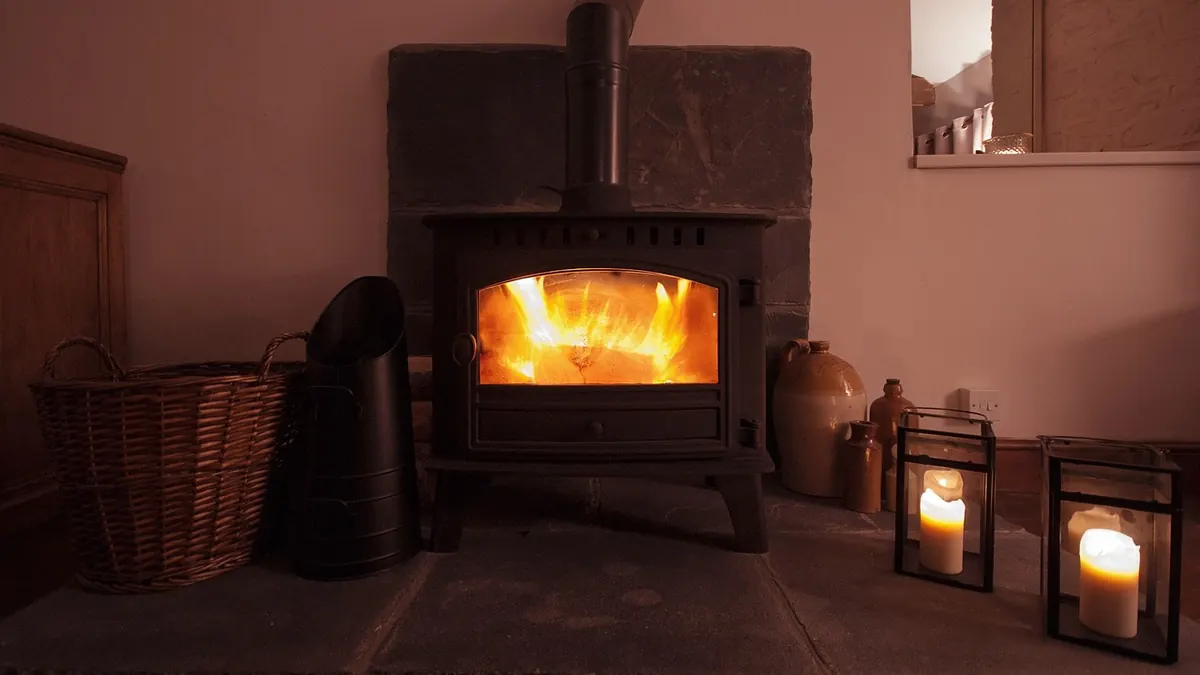
A cottage at the end of a track, no mains gas, and a cold snap that arrives in October and settles in until April. Heating shapes rural life more than almost any other decision — the bills, the chores, the comfort of a kitchen on a January morning. For most off-grid homes the realistic shortlist comes down to two options: a wood burner, a heat pump, or some combination of both. They are not really rivals. They do different jobs, at different temperatures, and they make very different demands on your time and your house.
What each system actually does
Wood burners
A stove is a space heater. It warms the room it stands in, plus whatever drifts up the stairs, and it does so with radiant heat that feels immediate when you walk in from the yard. A modern Ecodesign stove burns cleanly when it is run properly, and most of the heat it produces ends up in the room rather than up the flue — though a meaningful share always goes up the chimney, and more if the stove is oversized or the wood is damp.
Its rhythm is manual. You lay it, light it, feed it, empty the ash, sweep the chimney, and stack next winter's wood. In return you get heat that works during a power cut, needs no electricity to run a simple stove, and can be topped up with a chainsaw and a bit of patience.
Heat pumps
A heat pump does not create heat; it moves it. An air source unit pulls warmth out of the outside air — even on a frosty morning — and transfers it indoors. A ground source unit does the same via pipes buried in a trench or borehole. For each unit of electricity it uses, it delivers more than one unit of heat. How much more depends on the temperature difference it has to work against, which is why the flow temperature of your heating system matters so much.
It runs steadily rather than in bursts, and it usually provides your hot water as well. Best of all, it asks almost nothing of you day to day beyond an annual service.
Running costs: what really decides them
Compare cost per kilowatt-hour of delivered heat, not per bag of logs or per month on the meter. That means taking your wood price, your stove's real-world efficiency and your electricity tariff, and doing the arithmetic honestly.
Bulk logs bought by the load and seasoned for a year or two are usually the cheapest fuel in the countryside. The same logs in a netted bag from a garage forecourt are among the most expensive. If you have a barn, a log store and a supplier you trust, a stove can be very economical. If you are buying small quantities of kiln-dried wood in plastic, the sums change quickly.
Electricity costs more per unit than most other fuels, but a heat pump multiplies each unit into two, three or more units of heat. The biggest lever is flow temperature. Radiators sized for an old oil boiler may run at 70°C or higher; a heat pump performs far better at 35–45°C, which is why larger radiators, underfloor heating or a well-insulated house make such a difference. Time-of-use tariffs and running the pump overnight into a thermal store can help further, if your supplier offers them.
Fuel prices move, so treat any figure you read online — including anything a salesperson quotes — as a starting point. Ask an independent energy adviser or a heating engineer to model your own property.
The house matters more than the appliance
A leaky stone cottage with single glazing and no loft insulation will defeat a heat pump's economics long before the unit itself is at fault. Loft insulation, draught-proofing, thick curtains and secondary glazing are usually the best-value work you can do. Solid wall insulation is a bigger project: it needs care in older buildings to avoid trapping damp, and listed properties will need consent. Take specialist advice before committing.
A wood burner copes better with an imperfect house, because a hot stove throwing out radiant heat can make a draughty room feel habitable in a way a lukewarm radiator cannot. But remember that combustion needs air. A stove draws air from the room, and that air is replaced by cold air pulled in from outside. A leaky house and a big stove are not quite the free lunch they appear to be.
Environmental impact: carbon and smoke
Wood is often described as carbon-neutral, and it can be close to it — if the timber comes from a sustainably managed source, is regrown, is transported short distances and is burned dry. Burn wet wood and you waste much of its energy boiling off the water, while producing more smoke and more creosote in the flue. Seasoned wood, split and stacked under cover for a year or more, is better for your chimney, your neighbours and the air.
Heat pumps are only as green as the electricity that feeds them, and the grid is getting cleaner year on year. Refrigerant leakage is a real consideration, though modern units are far tighter than older ones.
Air quality deserves an honest mention. Wood smoke contains fine particulate matter, which is a genuine health concern in villages as well as cities. If you live in a smoke control area, you must use a DEFRA-exempt appliance and an approved fuel. If anyone in the household has asthma or a heart or lung condition, speak to a health professional before relying on a stove as your main heat source.
Practical considerations for off-grid properties
- Electrical capacity. A heat pump needs a decent supply. Check your incoming fuse size and whether your connection can take the load; an upgrade may be needed and can take time to arrange.
- Outdoor space. An air source unit needs clear airflow, a sensible distance from bedrooms and boundaries, and somewhere it will not annoy the neighbours. Permitted development rules have conditions — check with your local planning authority.
- Hot water storage. Heat pumps heat water to lower temperatures, so a larger cylinder or thermal store is often required. Plan the space for it.
- Fuel storage. Budget for a proper log store: raised off the ground, covered on top, open at the sides, holding at least a year's worth.
- Maintenance. Chimneys want sweeping at least annually, more often with heavy use. Heat pumps want an annual service.
- Power cuts. A simple stove keeps you warm when the lines are down. A heat pump does not. In rural areas, that is worth weighing carefully.
Running both: the rural compromise
Plenty of households keep a stove in one room for the coldest evenings and as backup, while a heat pump handles background warmth and hot water. It can work well, provided the stove is not so large that it overheats a now-insulated room. If you are hoping to claim a grant towards a heat pump, note that schemes carry conditions about existing heating — check the current rules before you buy anything.
How to decide
- Start with the building: loft, draughts, glazing, walls. Reduce demand before choosing kit.
- Ask for a room-by-room heat loss calculation, not a rule-of-thumb guess at the size you need.
- Check your electricity supply, outdoor space and cylinder location.
- Work out your cost per kilowatt-hour of delivered heat for each option, using your own fuel prices.
- Think about how you live: a heat pump suits steady, all-day warmth; a stove suits evenings, weekends and outages.
- Get two or three quotes from installers who will put their assumptions in writing.
Get the house right first, then buy the system that fits the way you actually live. A smaller stove and a better-insulated loft will beat a bigger stove and a colder house every time.
Photo: StockSnap / Pixabay